
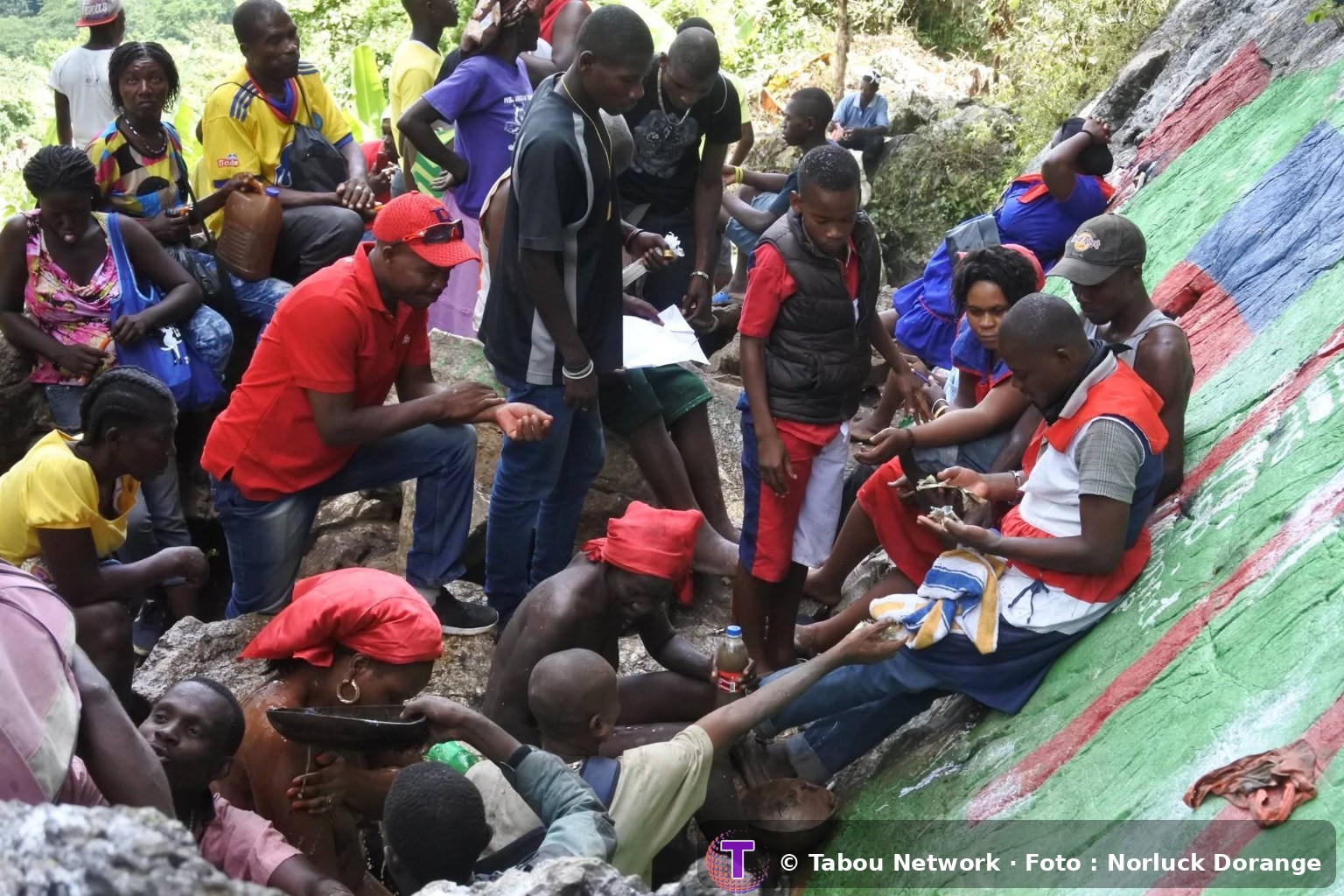
Since October 18, the Salvadoran president has sent more than 2,000 soldiers into our country to search for four Salvadoran aviation technicians who disappeared after an ambush in Croix-des-Bouquets. And he says our gangs are “satanic.” I read that once; I did not need to read it twice. When a foreign army lands among us with the word “satanic” on its lips, I know which way the finger will turn. Four briefs to understand.
BRIEF 1
Deuteronomy in hand, Vodou in the crosshairs?
On October 23, the Salvadoran president wrote on X, in Spanish: every soldier deployed is a believer, and they place the mission in God’s hands; our gangs are “satanic,” and “everyone knows they carry out human sacrifices.” God will give them victory, he said, quoting Deuteronomy 28:7, a verse about enemies struck down before God’s people. To those who had warned him, he answered in the same post: “We have never listened to them, and we are not going to start now.” On November 11, he put the same verse back on the table.
We will not put words in the president’s mouth. But when a war leader turns the Bible into a battle plan, we have the right to ask: in his book, who is the enemy? If the gangs are “satanic,” what will a young soldier who has never set foot in our country see when he walks past a peristyle, past a vèvè traced on the ground, past a dressed mapou tree?
The president knows words, and he knows how to use them. On November 3, he wrote to us in Kreyòl and invoked the name of Emperor Jean-Jacques Dessalines, Papa Nasyon, to speak of the traitors still among us. When a foreigner takes up the name of Papa Nasyon to walk over our heads, we must weigh every word.
Tabou is not here to defend gangs. Gangs are criminals, and criminals must answer to justice. But a gang is not a spirituality. A gang is not Vodou.
BRIEF 2
We have seen this film before
Bay kou bliye, pote mak sonje. The lakou remember.
1941–1942. The Catholic Church launches the “anti-superstition campaign,” which the people called “kanpay rejete a,” with the armed backing of Élie Lescot’s government. Ounfò are destroyed, sacred objects burned, oungan and manbo arrested. In March 1942, Jacques Roumain stands up in Le Nouvelliste to say no. That was 84 years ago, and the scars are still there.
January 2010. We have not finished pulling our dead from the rubble when an American televangelist, Pat Robertson, says on screen that the earth shook because we had made a “pact with the devil.” That pact was the 1791 Bois-Caïman ceremony he had in mind: the very ceremony that lit the revolt. The world heard him, and the words stuck.
December 2010. Cholera is ravaging the country. A rumor spreads: Vodou is sowing the disease with “powder.” In the Grand’Anse above all, mobs lynch at least 45 people; according to the Ministry of Communication at the time, most of the victims were oungan and leaf doctors. Depi bab vwazen w pran dife, mete pa w alatranp.
Every time a crisis is dressed up as a war on the “devil,” it is Vodou practitioners who pay. Rat manje kann, zandolit mouri inosan.
BRIEF 3
Holy war at home: who will protect the ounfò?
On November 17, several thousand people took to the streets of Port-au-Prince chanting the Salvadoran president’s name. I will not throw stones at them. According to the United Nations, more than 4,500 people have been killed by armed violence since January 2026. When you have just buried your child, your brother, your neighbor, you grab any hand held out to you. That is not foolishness; it is exhaustion, it is grief.
But grief must not make us forget the question. Amnesty International has already asked the Prime Minister and the Salvadoran president to make sure every operation respects human rights; he replied that NGOs are liars. In the lakou, people are watching, people are waiting. Chat pran nan dlo cho, lè l wè dlo frèt li pè l.
Who will explain to a soldier from San Salvador that a vèvè is not a satanic sign? Who will tell him that a manbo serving her lwa is not a gang leader? Who will protect our ounfò, our peristyles and our sacred trees, if one day an operation passes near them?
BRIEF 4
What Tabou asks
1. That the foreign forces and the Haitian State say, publicly, that Vodou is not a target.
2. That ounfò, peristyles, lakou and sacred places receive the same protection as churches and temples.
3. That the war on gangs remain a matter of security and justice, not a holy war brought in from elsewhere.
We do not need saviors coming to drive the devil out of our home. We need security, justice, and respect for who we are.
Guerlyne Petit
Lakou Kay Gran’n — Kay Nanm Lan
November 22, 2026
Nou pa sèlman eritye Ayiti nan men zansèt nou; nou prete l nan men jenerasyon k ap vini yo. Ann remèt yo li nan yon pi bon eta pase jan nou te jwenn li.
Sources
- Nayib Bukele, post on X, October 23, 2026 (“Muchos mensajes, análisis y comentarios como este…”), and November 11, 2026.
- Nayib Bukele, message in Kreyòl on X, November 3, 2026 (reported by EFE).
- EFE, October 23, 2026: “Bukele: Las pandillas en Haití son « satánicas », por lo que Dios nos concederá la victoria.”
- Jacques Roumain, À propos de la campagne « anti-superstitieuse », 1942.
- Kate Ramsey, The Spirits and the Law: Vodou and Power in Haiti, University of Chicago Press, 2011.
- CBN, “Statement Regarding Pat Robertson’s Comments on Haiti,” January 13, 2010; Associated Press, January 13, 2010.
- Associated Press, December 2, 2010, and AFP, December 23, 2010: lynchings in the Grand’Anse during the cholera epidemic.
- Associated Press, November 17, 2026: march in support of the Salvadoran president in Port-au-Prince.
- United Nations, Office of the High Commissioner for Human Rights (OHCHR): armed violence toll in Haiti, 2026.
- Amnesty International, statement on Salvadoran operations in Haiti, November 2026.
Laisser un commentaire